Home / Landscapes
The land, state by state
Australia is huge, and the land changes a lot as you drive. Each state in Roo Road Rescue has its own rocks, trees and plants beside the road, based on what you would really see there.
Look out for them as you drive. Here is what to spot, and a few facts about the real places.
- New South Wales
- ACT and the Monaro
- The Australian Alps
- Victoria
- Queensland
- Western Australia
- South Australia
- Northern Territory
- Tasmania
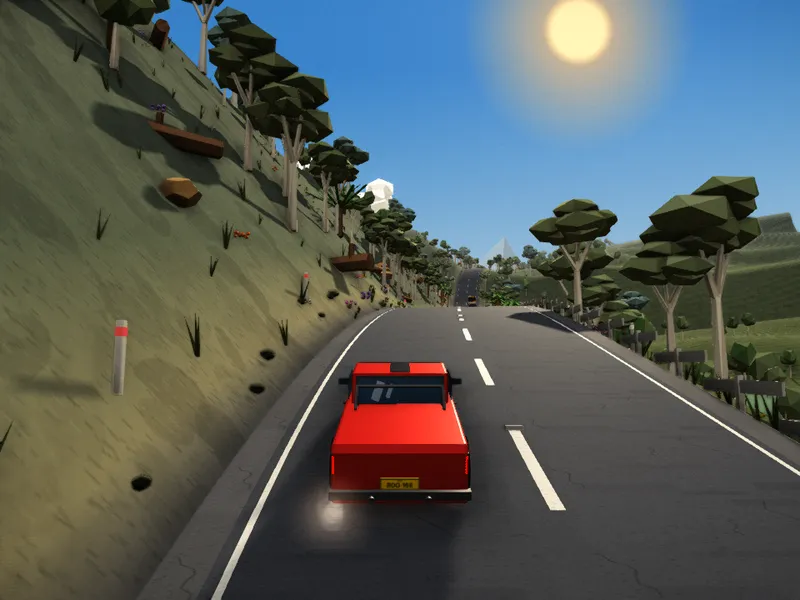
Sandstone country
New South Wales · In the game: Blue Mountains, Royal National Park, Bathurst
Orange and cream sandstone in layers, tall blue gums, and tree ferns in the shady gullies.
- The sandstone around Sydney and the Blue Mountains formed from river sand more than 200 million years ago.
- The blue in the Blue Mountains comes from a fine haze of oil that gum leaves give off on warm days.
- Tree ferns grow very slowly, only a few centimetres a year, so a tall one can be hundreds of years old.
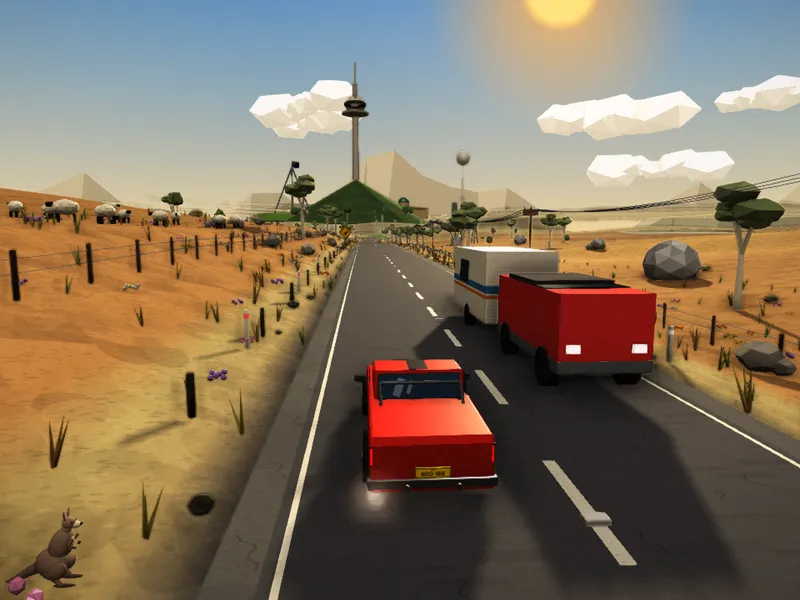
Granite tablelands
ACT and the Monaro · In the game: Snowy Mountains, Bathurst plains
Open, cold grassland high above the sea, with round granite boulders and pale gums.
- The round boulders are granite. Softer rock around them wore away over millions of years and left them sitting on top.
- Canberra sits about 580 metres above the sea, so winter mornings are often frosty.
- Kangaroos love these grassy plains, which is why the roads here have so many roo signs.
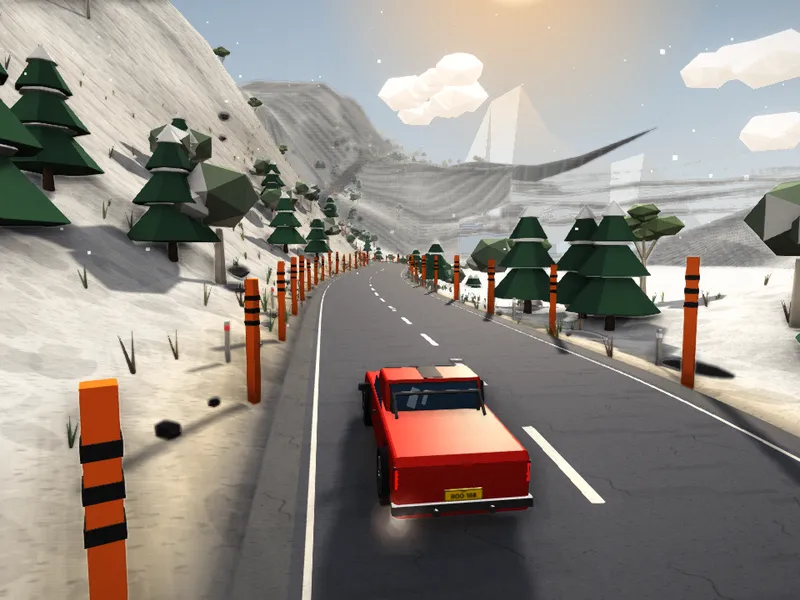
Snow gum country
The Australian Alps · In the game: Snowy Mountains (Perisher), Mt Hotham
Twisted snow gums with white and streaky bark, snow on the ground, and dark pines near the ski villages.
- Snow gums grow higher up the mountains than any other gum tree.
- Their bark peels in summer and shows stripes of green, red, orange and cream.
- After a bushfire a snow gum can sprout again from a big woody bulb under the ground.
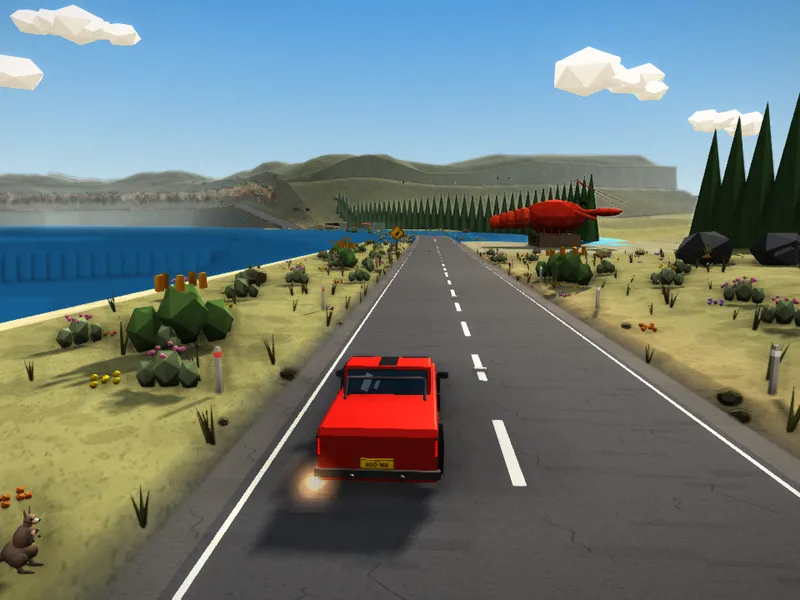
Volcano stone and stone walls
Victoria · In the game: Great Ocean Road, Mt Hotham
Black basalt rocks, long dry-stone walls along the fences, rows of dark cypress windbreaks, and tall forests with ferns.
- Western Victoria has hundreds of old volcanoes. The black rock in the paddocks is basalt, cooled lava.
- Farmers in the 1800s stacked the loose rocks into walls with no cement at all. Many are still standing.
- The mountain ash trees of the Otways are among the tallest flowering plants on Earth.
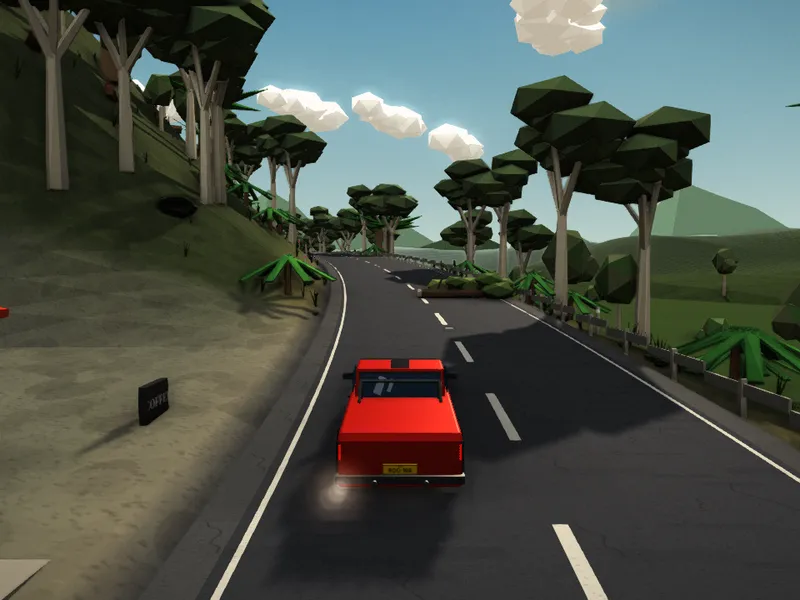
Tropical coast
Queensland · In the game: Daintree, Byron Bay (Tweed Valley), Gold Coast
Palm trees, sugar cane fields, purple jacarandas, and thick rainforest that comes right down to the road.
- The Daintree is often called the oldest tropical rainforest on Earth.
- Jacarandas come from South America. In Brisbane they turn whole streets purple in October and November.
- Sugar cane is harvested in the dry season, from about June to November.
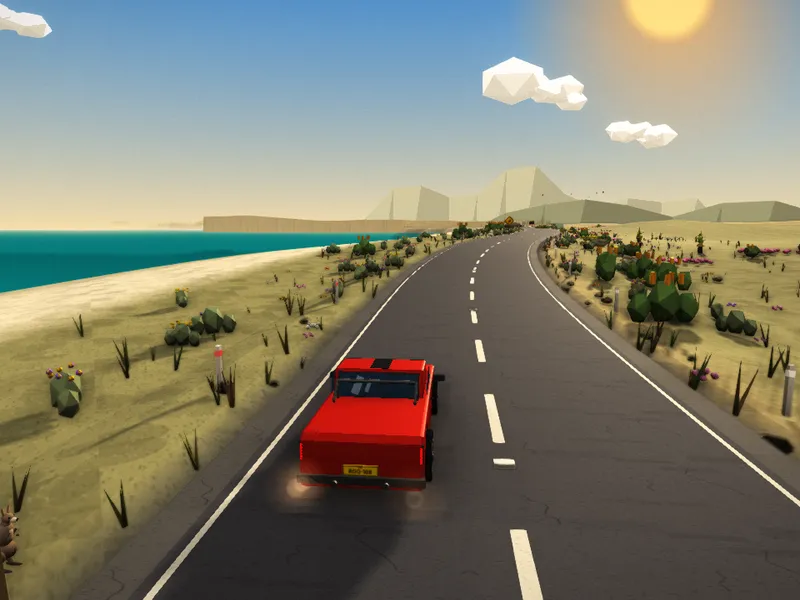
Wildflowers and white sand
Western Australia · In the game: Indian Ocean Drive, Lucky Bay
Low heath full of pink, yellow and white wildflowers, orange banksia cones, and dunes of bright white sand.
- WA has more than 12,000 kinds of wildflowers, and more than half grow nowhere else in the world.
- Most of them flower in spring, from about August to November.
- Banksia flowers turn into hard woody cones that only open their seeds after a fire.
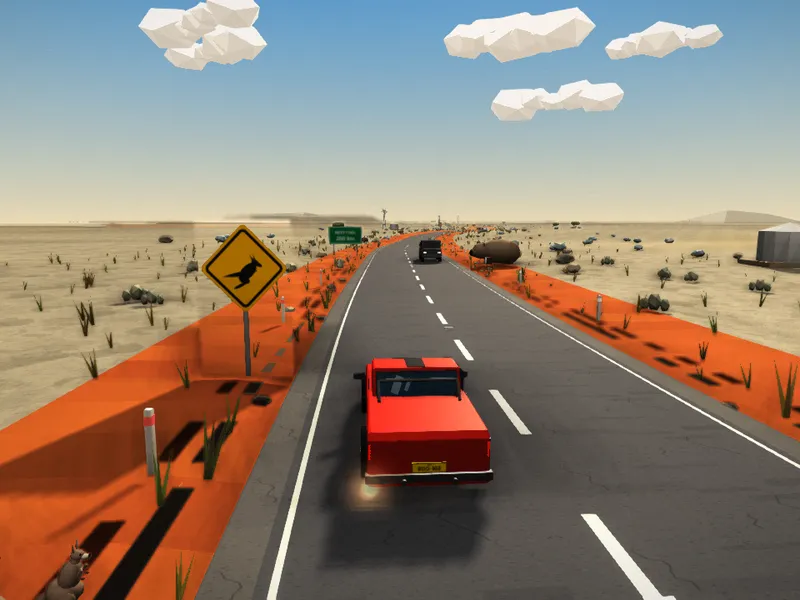
Mallee and saltbush
South Australia · In the game: Nullarbor
Grey-blue saltbush as far as you can see, mallee gums with many thin trunks, and flat limestone plains.
- Nullarbor means "no trees" in Latin. The plain is a giant slab of limestone.
- A mallee gum grows many trunks from one big root bulb, so it can survive drought and fire.
- Saltbush leaves are grey because tiny hairs reflect the sun and help the plant save water.
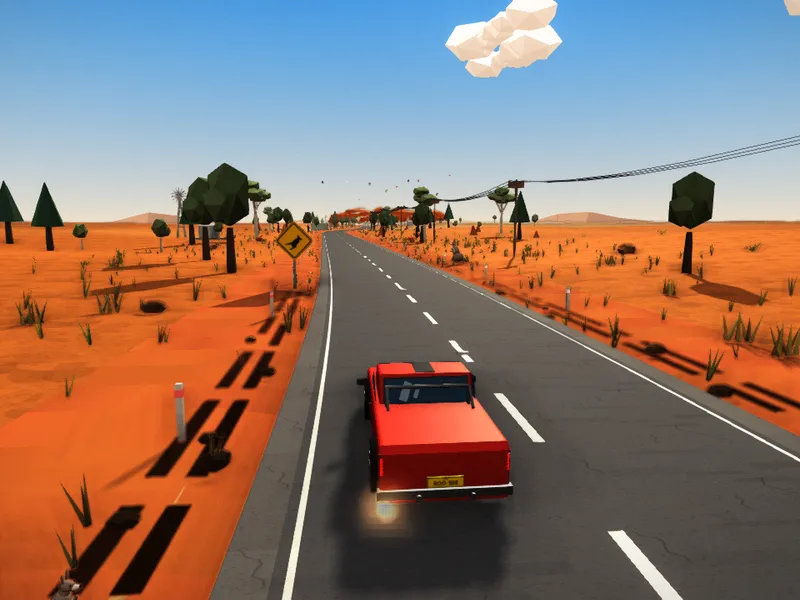
The red centre
Northern Territory · In the game: Uluru
Red sand, golden spinifex grass, tall termite mounds, dark desert oaks and white ghost gums.
- The sand is red because it contains iron oxide, the same thing that makes rust red.
- Spinifex is a spiky grass that covers huge areas of central Australia. Many small animals hide inside it.
- Termite mounds are built from soil and spit, and can last for decades.
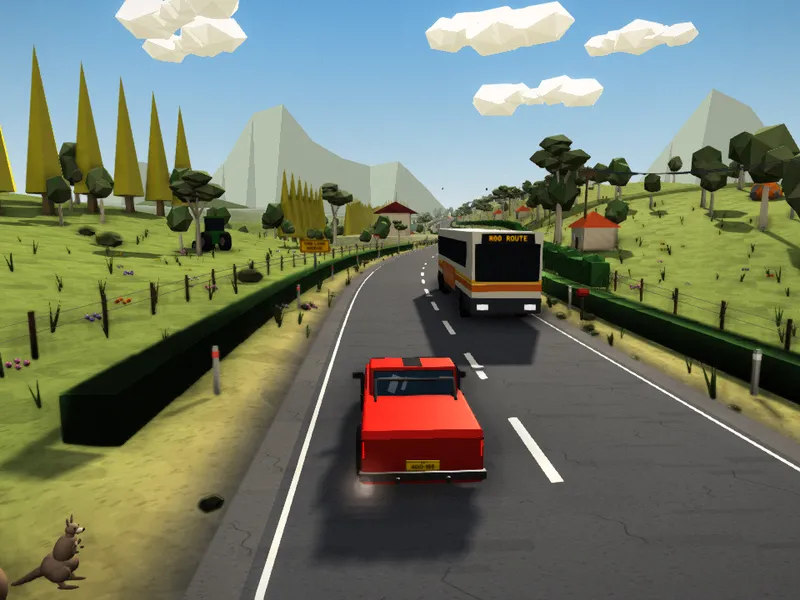
Emerald paddocks
Tasmania · In the game: Cradle Mountain, Freycinet
Bright green fields, hedgerows along the fences, rows of poplars that turn gold in autumn, and granite with orange lichen on the coast.
- Tasmania gets more rain than most of Australia, so the grass stays green for much of the year.
- Early farmers planted hawthorn hedges as fences. Many are now more than 150 years old.
- The orange on the coastal rocks is lichen, a living partnership between a fungus and algae.
On a real road trip? Wildlife is most active at dawn and dusk, especially where grass grows right up to the road. Slow down, and stop for a break every 2 hours.
See the buildings of each state, the Big Things, or meet the wildlife.